The Only Doe
Advertisement
Games Overview
The Only Doe APK is a slow-burn indie game that blends minimalist gameplay, emotional storytelling, and haunting atmosphere, delivering a deeply introspective.
Table of Contents
The Only Doe APK: A Hauntingly Intimate Indie Game That Turns Isolation Into Art
In a world where most mobile games are chasing bigger explosions, louder rewards, and infinite dopamine loops, The Only Doe APK does the exact opposite—and somehow hits harder because of it. This is not a game you “grind.” This is a game you sit with. It’s quiet, uncomfortable at times, emotionally heavy, and deeply personal. And honestly? That’s the whole point.
If you’re tired of flashy UI spam and games that treat your attention span like it’s on life support, The Only Doe feels like stepping into a different mental space altogether. It’s slow. It’s symbolic. It doesn’t hold your hand. And it absolutely trusts you to think.
A Concept That Feels Small—But Cuts Deep
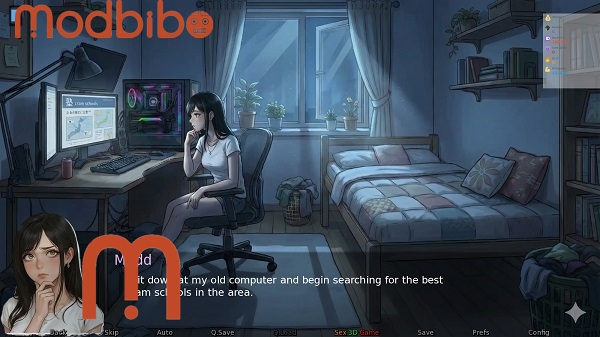
The Only Doe is an atmospheric narrative-driven indie game built around solitude, survival, and identity. You play as a lone doe—fragile, observant, and constantly on edge—in a world that feels empty but never truly safe. There’s no massive tutorial dump, no checklist screaming at you to optimize everything. Instead, the game drops you into a minimalist environment and lets meaning emerge naturally.
The absence of constant dialogue or exposition isn’t laziness—it’s intentional. The game speaks through space, silence, and motion. Every step you take feels like it matters, not because the game says so, but because the world reacts in subtle ways.
This is one of those experiences where less content somehow creates more emotional weight.
Storytelling Without Words (And Why It Works)
One of the boldest choices The Only Doe makes is refusing to explain itself. There’s no narrator telling you what to feel. No text box spelling out the themes. The story unfolds through environmental cues, recurring imagery, and the quiet rhythm of movement.
You begin to piece together the narrative by noticing patterns:
Advertisement
-
Why certain areas feel abandoned
-
Why some paths loop back instead of progressing
-
Why moments of stillness feel heavier than moments of danger
The game trusts the player to interpret meaning, and that trust is rare—especially on mobile platforms. Depending on how you play and what you focus on, the story can feel like a metaphor for grief, loneliness, survival, or self-preservation in a hostile world.
There’s no single “correct” interpretation. And that ambiguity is one of the game’s strongest weapons.
Gameplay: Simple Controls, Complex Feelings
Mechanically, The Only Doe keeps things minimal. Movement is smooth and deliberate. Actions are limited, but every mechanic is tuned to reinforce vulnerability rather than power.
You’re not a hero. You’re not leveling up into something unstoppable. You are constantly aware of your fragility—and the game never lets you forget it.
Instead of combat-heavy systems, the gameplay emphasizes:
-
Awareness of surroundings
-
Timing and patience
-
Choosing when to move and when to stay still
This creates a constant low-level tension. You’re rarely rushed, but you’re never completely at ease. It’s the kind of design that makes silence feel loud.
Atmosphere Over Action, Every Time
If there’s one word that defines The Only Doe, it’s atmosphere.
The environments are stripped-down but emotionally loaded. Empty fields, dim forests, and wide open spaces feel less like “levels” and more like mental states. The lack of clutter forces you to focus on small details—shadows shifting, distant movement, subtle changes in sound.
The sound design deserves serious respect. Instead of dramatic music cues, the game uses ambient audio sparingly. Wind, footsteps, distant echoes—these sounds aren’t background noise; they are the experience.
Sometimes there’s music. Sometimes there isn’t. And when silence takes over, it’s never accidental.
Visual Style: Minimalism With Meaning
Visually, The Only Doe avoids hyper-realism and flashy effects. The art style leans into soft colors, restrained lighting, and clean shapes. Everything feels slightly muted, like the world itself is holding its breath.
Character animation is subtle but expressive. The way the doe moves—hesitant, alert, occasionally calm—tells its own story. You can feel fear without a single animation screaming it in your face.
This minimalist approach does two things:
-
It keeps the focus on emotion instead of spectacle
-
It allows players to project their own feelings onto the experience
That second point is huge. The game becomes personal because it leaves space for the player’s interpretation.
Themes That Stick With You After You Close the Game
What makes The Only Doe linger in your mind isn’t what happens—it’s what it suggests.
The game quietly explores themes like:
-
Isolation in a world that doesn’t explain itself
-
Vulnerability without protection or guidance
Advertisement
-
The instinct to survive versus the desire to rest
-
Being watched versus being alone
None of these ideas are shoved into your face. They emerge naturally as you move through the environment. The result is an experience that feels introspective instead of preachy.
You don’t finish the game and immediately forget it. You finish it and think, “Wait… what was that really about?” And then you keep thinking about it.
Pacing That Refuses to Rush You
In an era where games are terrified of losing players to boredom, The Only Doe commits to slow pacing without apology. Progress isn’t measured in levels or points. It’s measured in understanding.
The game encourages you to:
-
Stop moving and observe
-
Revisit areas without clear objectives
-
Accept that not every question will be answered
This pacing won’t work for everyone—and that’s okay. If you need constant stimulation, this game will feel empty. But if you’re open to slower, mood-driven experiences, it feels refreshingly honest.
Why The Only Doe Stands Out on Mobile
Mobile platforms are flooded with games designed around monetization first and experience second. The Only Doe feels like it exists outside that ecosystem entirely.
It doesn’t chase trends.
It doesn’t copy popular mechanics.
It doesn’t treat players like short-term engagement statistics.
Instead, it feels like a personal project—something made because the creator needed to make it, not because it would dominate charts.
That authenticity is rare, and players can feel it immediately.
Not a Game for Everyone—and That’s a Strength
Let’s be real: The Only Doe is not universal. Some players will call it boring. Others will say “nothing happens.” And honestly? That reaction kind of proves the game’s point.
This experience isn’t about winning or mastering systems. It’s about presence. If you meet it halfway, it offers something deeply memorable. If you don’t, it won’t beg for your attention.
And that refusal to compromise is exactly why it deserves respect.
Final Thoughts: Quiet, Fragile, and Unforgettable
The Only Doe APK isn’t loud. It isn’t fast. It isn’t trying to impress you with numbers or rewards. What it does instead is far riskier—it asks you to slow down, feel uncomfortable, and exist inside its world without distractions.
It’s the kind of game you recommend carefully, knowing it won’t click with everyone—but when it does click, it hits hard.
If you’re looking for a mobile game that feels more like an interactive poem than a product, The Only Doe is absolutely worth your time. Not because it demands attention—but because it earns it.